Buy the wrong stamp and your $300 bat never leaves your bag. That’s the mistake most slowpitch guides set you up for — they rank USSSA and USA/ASA bats on one list like they’re interchangeable. They’re not. A USSSA bat is illegal in most USA Softball rec leagues, and a USA bat will feel dead in a USSSA tournament.
This guide is built around that split. Every bat below is labeled with exactly which leagues it’s legal in, and the first section shows you how to check your league’s stamp in about 30 seconds. Get that right and everything else — endload, barrel length, composite vs. alloy — gets simple.
As an Amazon Associate, Softball Hut earns from qualifying purchases. Prices change often — click through to see today’s price.
In this guide: Quick picks · How to choose · KP23 · Krecher XL · Stadium · Tantrum · Mercy · Bedlam · MV-1 · Vicious · KP23 vs Krecher · FAQs · Verdict
The 8 Best Slowpitch Softball Bats for 2026 — Quick Picks
| Bat | Best For | Legal In | Swing Feel | Price | |
|---|---|---|---|---|---|
| Miken KP23 2026 | Best USSSA overall | USSSA | Endloaded, 2-pc | ~$300 | Check Price |
| Worth Krecher XL | Best for power hitters | USSSA | XL endload, 1-pc | ~$300 | Check Price |
| DeMarini Stadium 2026 | Premium power pick | USSSA | Endloaded, 2-pc | ~$350 | Check Price |
| Easton Tantrum 2026 | Most versatile lineup | USSSA or USA* | Loaded or balanced | ~$300 | Check Price |
| DeMarini Mercy 2026 | Best USA/ASA bat | USA/ASA | Balanced, 2-pc | ~$300 | Check Price |
| Worth Bedlam Josh Riley | Best whippy power bat | USSSA | XL endload, 2-pc | ~$300 | Check Price |
| Miken MV-1 240 | Best mid-range dual stamp | USSSA + USA | Slight endload, alloy | ~$150–200 | Check Price |
| Miken Vicious 13″ Maxload | Best budget bat | USSSA + USA | Maxload, alloy | ~$140 | Check Price |
*The Tantrum is sold in separate USSSA and USA/ASA versions — pick the one that matches your league’s stamp.
How to Choose a Slowpitch Softball Bat (Don’t Skip This)
Step 1: Check your league’s stamp — it eliminates half the market
Every legal slowpitch bat carries a certification stamp on the barrel. Your league accepts some stamps and bans the rest. This is the single most important thing on this page:
USSSA
The 1.20 BPF thumbprint (newer bats carry the 240-compression “NTS tested” stamp). Higher-performance standard for competitive and tournament slowpitch, tuned for the 44/375 ball. Typical weights 26–30 oz.
USA Softball (ASA)
The rec-league standard, tuned for the lower-compression 52/300 ball. Typical weights 26–28 oz. A USSSA bat is not legal here.
Dual Stamp
Carries both stamps — legal in USSSA and USA leagues. The versatility pick if you bounce between leagues or aren’t sure yet. Many also carry NSA and ISA stamps.
Rule of thumb: tournament player, buy USSSA. Church or rec league, buy USA/ASA. Play both, buy dual stamp.
Step 2: Endloaded or balanced?
Endloaded (Maxload, XL — about a half-ounce of extra weight in the barrel) gives you more momentum through the zone and more distance if you already generate bat speed. It’s the power hitter’s choice and it’s less forgiving on mishits. Balanced bats swing quicker with more barrel control — the choice for contact and line-drive hitters who value consistency over max distance. Be honest about which one you are; most rec players hit better with balanced.
Step 3: One-piece or two-piece?
One-piece bats are stiffer with direct feedback — you feel everything, including the mishits. Power hitters tend to prefer them. Two-piece bats have a flex point between handle and barrel that dampens vibration and adds whip, which most players find smoother and more forgiving. There’s no universal winner; it’s feel.
Step 4: Composite or alloy — the break-in truth
Composite bats need break-in: roughly 150–200 hits with real softballs before they reach peak pop. Never break one in with pitching-machine baseballs — you’ll damage the barrel. They also hate the cold: don’t swing composite below about 60°F or you risk cracking it and voiding the warranty.
Alloy (including multi-wall alloy like the Miken Vicious and MV-1) is hot out of the wrapper, needs zero break-in, shrugs off cold weather, and costs half as much. The trade-off is a slightly smaller sweet spot at the very top end. For most league players, that trade is worth it.
Step 5: Pick the right weight
Adult slowpitch standard is 34 inches long and 26–28 oz — that covers the vast majority of rec players. Go heavier (28–30 oz, USSSA only) only if you can keep your bat speed up, because a heavy bat swung slowly loses to a lighter bat swung fast. When you’re torn between two weights, take the lighter one.
The 8 Best Slowpitch Softball Bats for 2026
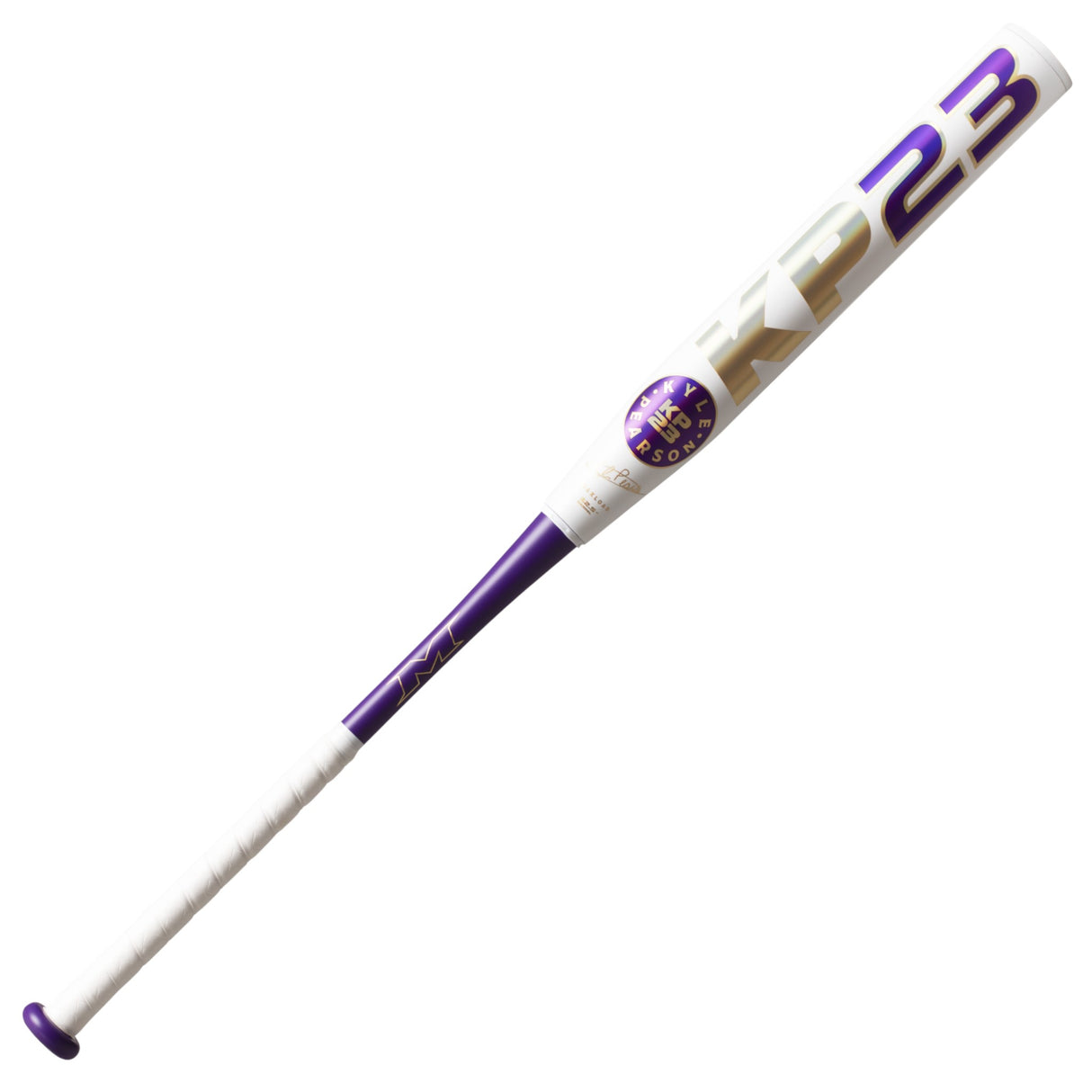
Miken KP23 2026
Key specs: 2-piece composite · 12.5″ Tri-Zone barrel · Maxload endload · USSSA · 24–28 oz
~$300 on Amazon
The Kyle Pearson signature line has been the USSSA tournament standard for years, and the 2026 KP23 keeps it there. The two-piece construction pairs a stiff Pro Flex handle with Miken’s Tri-Zone barrel, which is why power hitters describe it as smooth but violent — vibration stays in the handle while the barrel does the damage. The 12.5″ barrel is on the shorter side, which concentrates the sweet spot rather than spreading it thin.
What separates it from the pack is consensus: it shows up at the top of nearly every independent 2026 slowpitch ranking. If you play USSSA and want one bat that nobody will second-guess, this is it.
Pros:
- The benchmark USSSA tournament bat — safest pick in the category
- Two-piece flex kills hand sting on mishits
- 12.5″ barrel with a dense, forgiving sweet spot
Cons:
- USSSA only — illegal in USA/ASA rec leagues
- Composite needs ~150+ hits of break-in
- Keep it above 60°F; cold weather voids the warranty
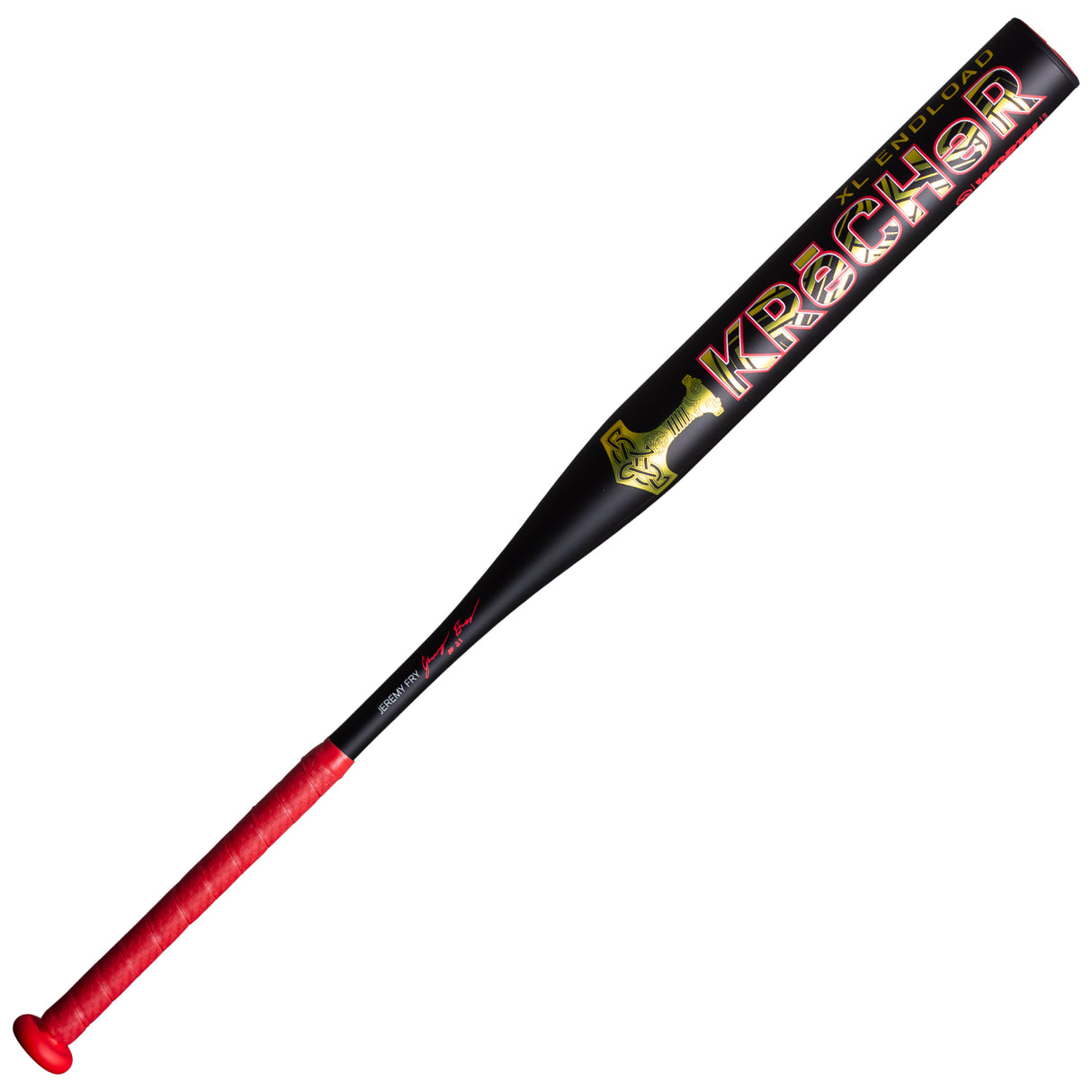
Worth Krecher XL 2026
Key specs: 1-piece composite · 12.75″ X868 barrel · XL endload · USSSA/NSA/ISA · ~$300
~$300 on Amazon
The Jeremy Fry signature Krecher is the bat for the guy who already hits it 300 feet and wants 330. The one-piece construction is stiff and honest — maximum energy transfer, zero flex-point loss — and the XL endload piles weight behind the barrel. Worth’s X868 barrel tech stretches the sweet spot so the endload doesn’t turn mishits into pop-ups.
Compared to the KP23, this is the brute-force alternative: stiffer feel, more direct feedback, and a longer 12.75″ barrel. If you’ve swung one-piece bats your whole life and like feeling exactly where you hit it, the Krecher will feel like home.
Pros:
- Maximum barrel mass for distance — the fence-clearer’s bat
- Stiff one-piece feel that power hitters trust
- X868 barrel keeps the sweet spot generous despite the endload
Cons:
- Unforgiving if your bat speed isn’t there — be honest with yourself
- More hand sting than two-piece bats on mishits
- Needs a real break-in period like all composites
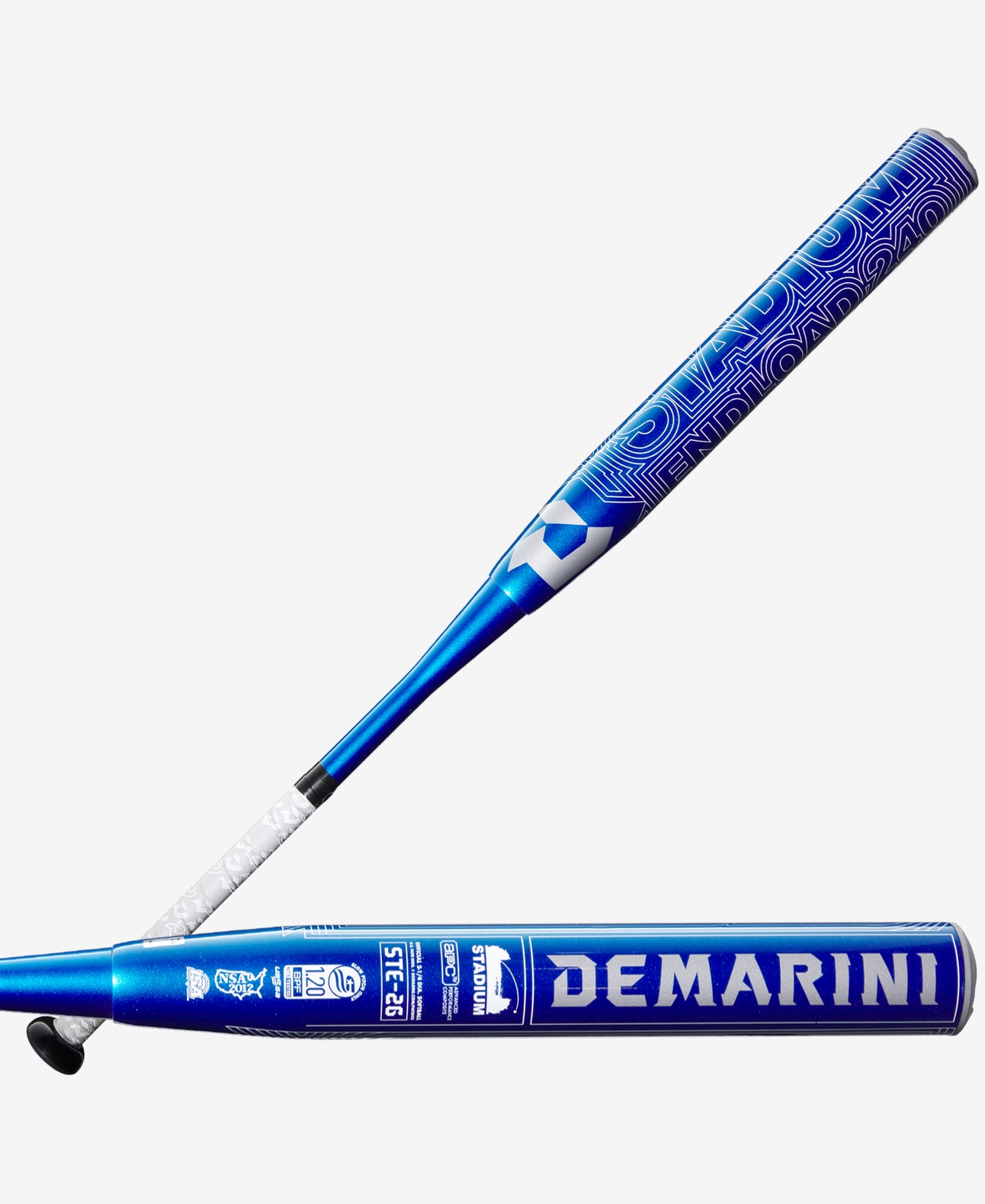
DeMarini Stadium 2026
Key specs: 2-piece composite · 13″ APC barrel · Endloaded · USSSA/NSA/ISA · Made in USA
~$350 on Amazon
The Stadium is DeMarini swinging for the fences — literally. The 13″ Advanced Performance Composite barrel is engineered for maximum compression and, unusually for a composite this hot, it’s game-ready fast with a rapid break-in. The stiff 4.One handle forces the barrel to do the flexing, which is where the exit velocity comes from.
At around $350 it’s the price ceiling of this list, and you should only pay it if you’re a genuine USSSA power hitter who’ll use what it offers. For that player, the extra $50 over the KP23 buys a longer barrel and a bat that’s hot from swing one.
Pros:
- 13″ barrel — the biggest hitting surface among the premium USSSA bats
- Hot out of the wrapper; shortest break-in of the composites here
- Designed and built in the USA with a 1-year warranty
Cons:
- Most expensive bat on this list
- Overkill for rec-league USA/ASA play (and not legal there anyway)
- Endload demands real bat speed
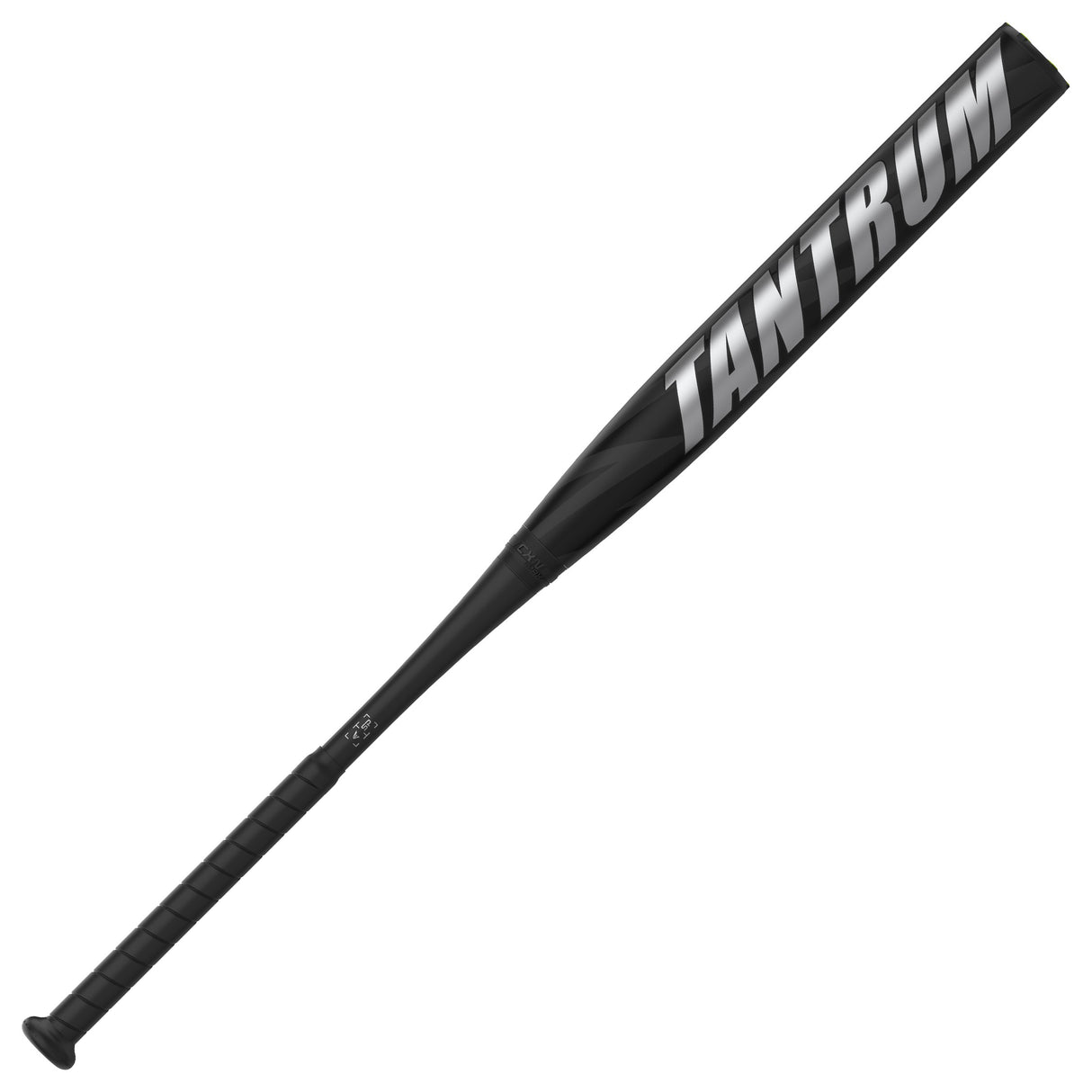
Easton Tantrum 2026
Key specs: 2-piece composite · 12.75″ HDK23 carbon barrel · Loaded or balanced options · USSSA and USA/ASA versions sold separately
~$300 on Amazon
Easton’s smartest move with the Tantrum is refusing to make one bat. The lineup spans loaded USSSA bombers and balanced USA/ASA models, all sharing the HDK23 carbon barrel and the CXN MC+ connection that kills vibration. The Power Boost soft knob is a small thing you notice on swing fifty of a tournament day, when your hands aren’t buzzing.
The catch: USSSA and USA/ASA are separate models, so double-check the stamp on the listing before you buy. Pick the wrong one and you’ve bought a $300 paperweight for your league.
Pros:
- One lineup covering both certifications and both swing styles
- Excellent vibration dampening for long tournament days
- G4S barrel tech keeps pop consistent even on off-center contact
Cons:
- Easy to accidentally buy the wrong certification — verify the stamp
- Jack of all trades; the KP23/Mercy beat it within their own lanes
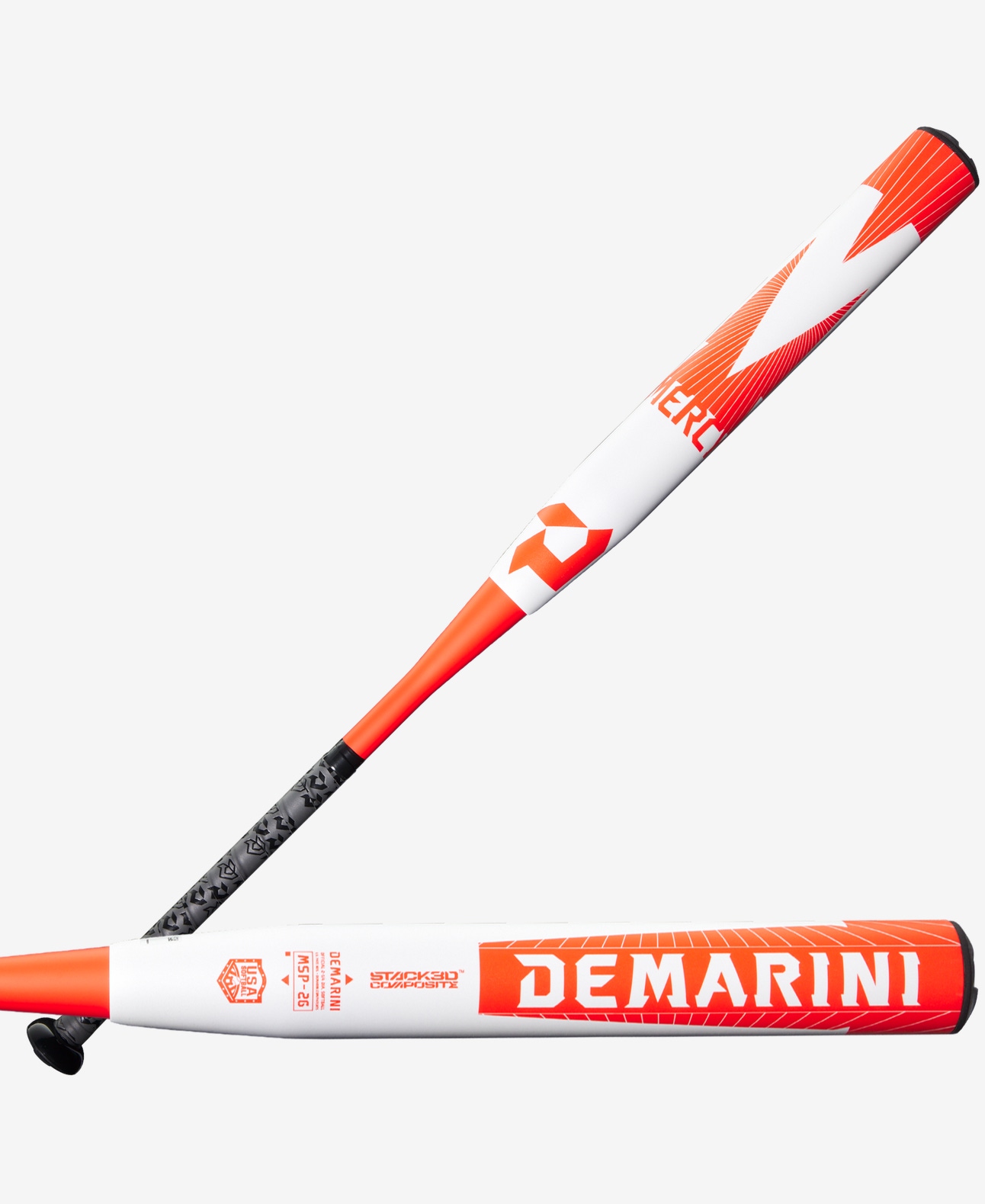
DeMarini Mercy 2026
Key specs: 2-piece composite · 13″ Stack3d double-wall barrel · Balanced · USA/ASA · 24–26 oz
~$300 on Amazon
USA/ASA rec leagues are where most slowpitch is actually played, and the Mercy is the bat built for them. The 13″ Stack3d double-wall barrel is tuned for the 52/300 ball — softer ball, different physics than the USSSA game — and the balanced swing weight lets contact hitters whip it through the zone instead of dragging an endload around.
Reviewers keep calling it the most underrated USA bat going, which makes sense: it doesn’t have the loudest marketing, it just puts line drives in gaps. If your league requires the USA stamp, start here.
Pros:
- Purpose-built for the USA/ASA ball — not a detuned USSSA bat
- Balanced 13″ barrel suits the most common rec-league swing
- Light 24–26 oz options for players who value bat speed
Cons:
- USA/ASA only — can’t cross over to USSSA tournaments
- Power hitters may want more endload
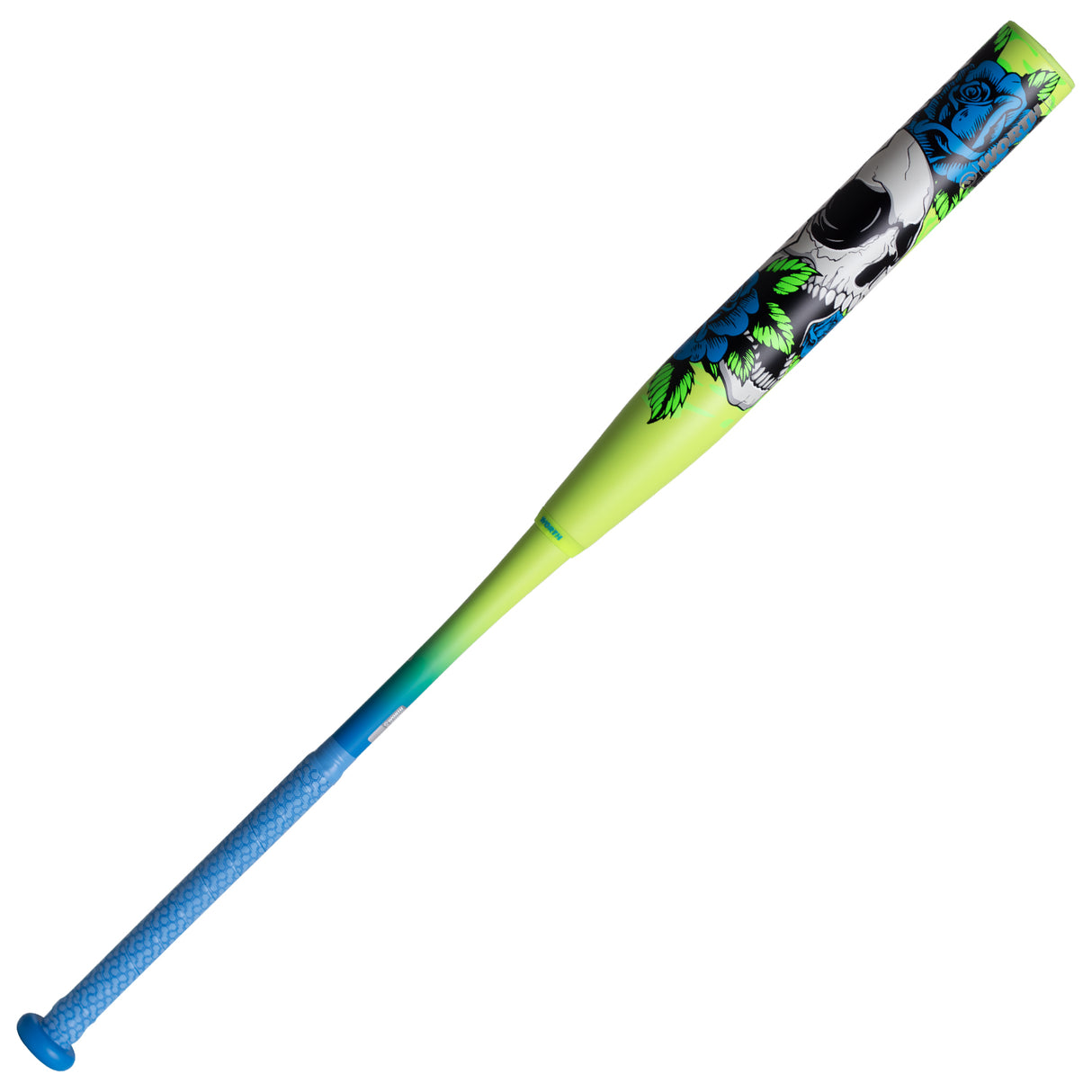
Worth Bedlam Josh Riley 2026
Key specs: 2-piece composite · 12.5″ X868 barrel · XL .5 oz endload · S-FLEX handle · USSSA/ISA/NSA
~$300 on Amazon
The Bedlam XL is Worth’s answer for the USSSA hitter who wants endloaded pop without a plank-stiff bat. The S-FLEX handle adds whip through the zone — more flex and forgiveness than a one-piece — while the XL .5 oz endload keeps mass behind the ball. The compact 12.5″ X868 barrel is the shortest in the power tier, which keeps it quick enough to turn on inside pitches instead of getting jammed.
Think of it as the middle ground between the Krecher and the KP23: endloaded like the Krecher, but with the two-piece flex and smoother feel of the KP23 crowd. If you like the idea of an endload but your bat speed isn’t elite, this is the most forgiving way to get one.
Pros:
- XL endload with real handle whip — a rare combination
- X868 barrel flex stretches the sweet spot despite the endload
- Full 25–28 oz range, including 28 oz for heavy-swing hitters
Cons:
- XL endload still asks for decent bat speed
- Not the pick for contact-only hitters — that’s the Tantrum’s lane
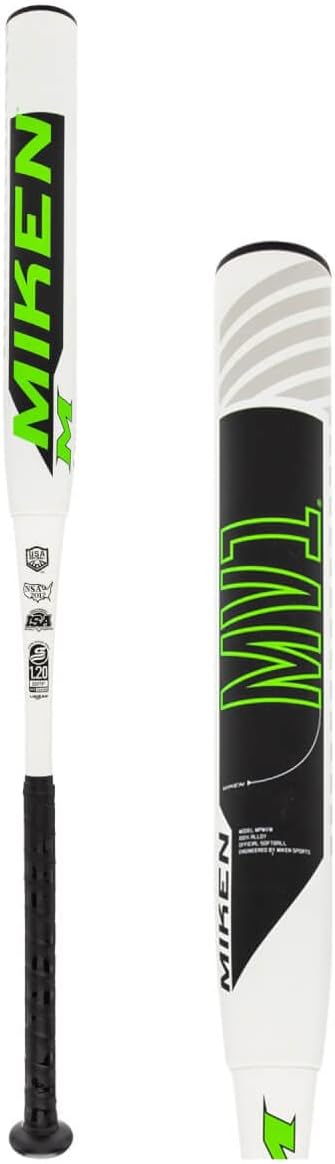
Miken MV-1 240
Key specs: 2-piece all-alloy E-Flex 700 · Multi-wall 13″ barrel · Slight endload · USA + USSSA 240 (+ NSA/ISA)
~$150–200 on Amazon
The MV-1 is the Swiss Army knife of slowpitch bats. The dual stamp — USA and the new USSSA 240 — plus NSA and ISA means it’s legal just about anywhere you’ll ever play. Because it’s all-alloy, there’s no break-in, no cold-weather worries, and it’ll survive the team bag being thrown in a truck bed.
The slight endload gives it more thump than a typical alloy bat without demanding the bat speed of the big composites. At roughly half the price of the premium tier, it’s the value play for the player who wants one bat for every league.
Pros:
- Legal in virtually every league — the one-bat solution
- Zero break-in; hot out of the wrapper
- Alloy durability laughs at cold weather and team-bag abuse
Cons:
- Alloy sweet spot can’t quite match the top composites at full break-in
- Slight endload won’t satisfy true power hitters
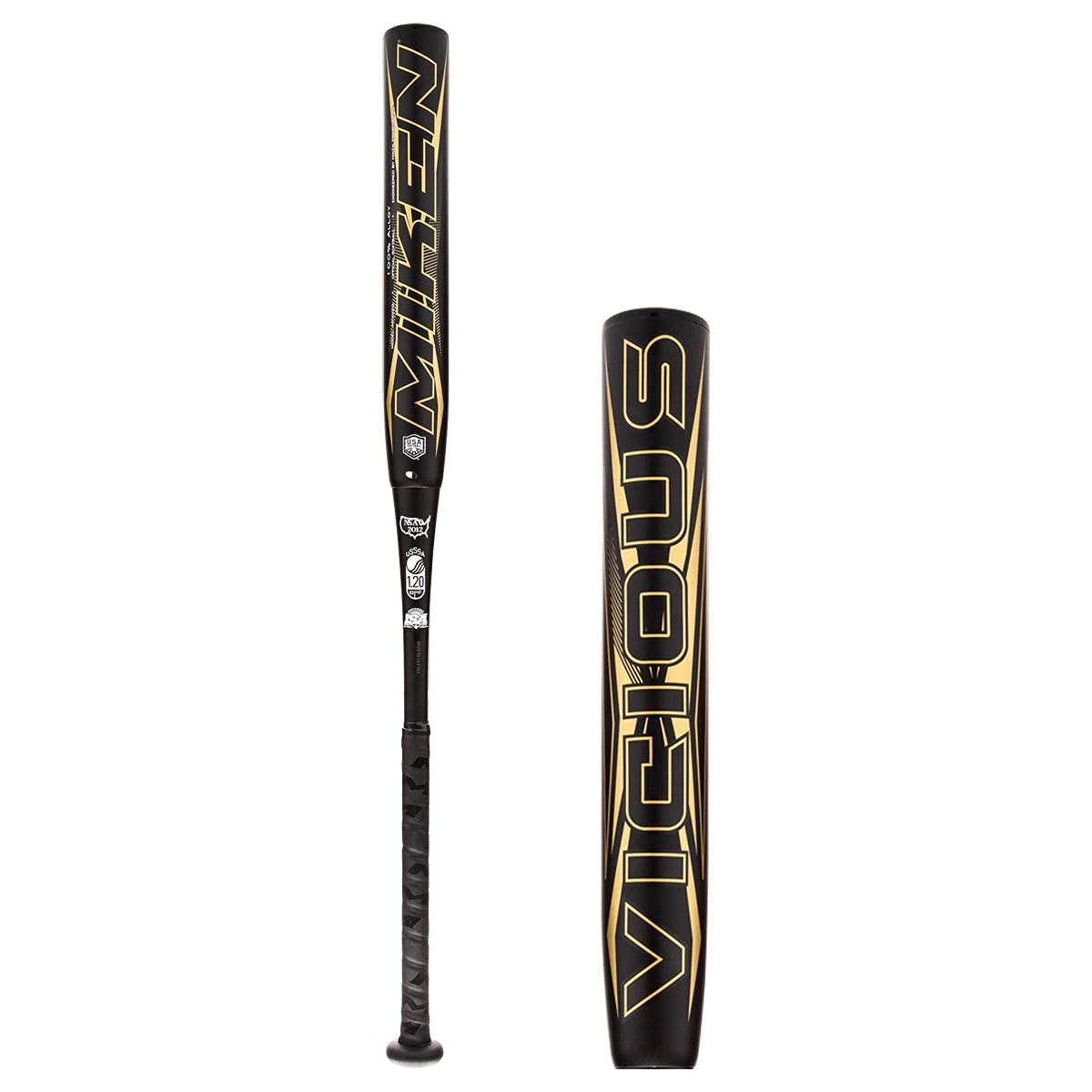
Miken Vicious 13″ Maxload
Key specs: Multi-wall alloy · 13″ barrel · Maxload endload · Dual stamp (USA + USSSA)
~$140 on Amazon
Here’s the honest truth most $300-bat roundups won’t tell you: for typical rec-league play, the Vicious gets you 90% of the performance for under half the money. The multi-wall alloy barrel is hot from day one, the Maxload gives it real carry, and the dual stamp means it plays in both worlds. It’s a consistent best-seller in Amazon’s slowpitch category for a reason.
Buy this if you play once or twice a week, don’t want to think about break-in or temperature, and would rather spend the other $160 on league fees. Nobody at the field will know you spent $140.
Pros:
- Unbeatable price-to-performance in slowpitch
- Dual stamp, zero break-in, cold-proof alloy
- One of the longest-running dual-stamp listings on Amazon — players have been buying it for years
Cons:
- Serious tournament players will outgrow it
- Alloy feel is harsher than two-piece composite on mishits
Head-to-Head: Miken KP23 vs Worth Krecher XL
The two names every USSSA tournament player argues about. Both cost ~$300. The decision is swing feel, not quality:
- Construction: KP23 is two-piece (flex, forgiveness); Krecher XL is one-piece (stiff, feedback).
- Barrel: KP23’s 12.5″ Tri-Zone vs Krecher’s 12.75″ X868 — the Krecher gives you a touch more plate coverage.
- Endload: Both endloaded, but the Krecher’s XL load is the more aggressive of the two.
- Verdict: Coming from a two-piece background or want the smoother swing? KP23. Swung one-piece your whole life and trust stiff feedback? Krecher XL. You won’t go wrong with either — they’re the two most consensus-recommended USSSA bats of 2026.
The $100 vs $150 vs $200 Decision
If the premium tier made your wallet flinch, here’s the honest ladder:
- ~$100: The Easton Hammer or Miken Chaos get you a legal, durable alloy bat for casual rec play. Fine for once-a-week softball.
- ~$150: The Miken Vicious 13″ Maxload — this is the sweet spot. Dual stamp, real pop, no break-in. Most league players should stop here.
- ~$200: Hunt a clearance 2025 flagship (last year’s KP23 often drops to ~$199–229). Previous-year composites at clearance are the best value in the sport if you can find your weight in stock.
Slowpitch Bat FAQs
What’s the difference between USSSA and USA/ASA slowpitch bats?
USSSA bats meet the 1.20 BPF standard (newer ones carry the 240-compression stamp) and are tuned for the livelier 44/375 ball used in competitive and tournament play. USA/ASA bats are built for the softer 52/300 ball of rec leagues. They’re not interchangeable — check your league’s required stamp before buying.
Can I use a USSSA bat in a USA/ASA league?
No. USA/ASA leagues check for the USA stamp, and a USSSA-only bat is illegal there. If you play both, buy a dual-stamp bat like the Miken Vicious or MV-1.
Do composite slowpitch bats need a break-in period?
Yes — plan on 150–200 hits with real softballs before a composite reaches full pop. Use only softballs for break-in; hitting baseballs (especially from a pitching machine) can crack the barrel. Alloy bats need no break-in at all.
What weight slowpitch bat should I swing?
Most adult players land at 34″/26–28 oz. Only go up to 28–30 oz (USSSA) if you can maintain your bat speed — a lighter bat swung fast beats a heavy bat swung slow. Between two weights, take the lighter one.
How long does a composite slowpitch bat last?
A few seasons of regular league play is typical. The two killers are cold weather (don’t swing composite below ~60°F — it can crack and void your warranty) and improper break-in. Alloy bats last considerably longer.
Are expensive slowpitch bats worth it for rec league?
Honestly, often not. A $140 dual-stamp alloy bat like the Vicious covers the vast majority of rec players. The $300 composites earn their money in USSSA tournament play, where the hotter standard actually matters.
Final Verdict
Check your stamp first, then match the bat to your swing. USSSA tournament player who wants the consensus pick: Miken KP23. Pure brute-force power: Worth Krecher XL. Premium two-piece power that’s hot from swing one: DeMarini Stadium. Endloaded pop with a whippy two-piece handle: Worth Bedlam XL. USA/ASA rec league: DeMarini Mercy. One bat for every league: Miken MV-1. And if you just want the smartest $140 in slowpitch: Miken Vicious 13″ Maxload.
Playing USA/ASA only? Our dedicated best USA/ASA slowpitch bats guide goes deeper on the rec-league side. And if you’re still unsure about sizing, run your numbers through our softball bat size calculator.
How we picked: we cross-referenced every major 2026 slowpitch buying guide, verified certification stamps and specs against manufacturer and retailer listings, and weighted the bats that independent guides agree on. Prices were accurate at research time and move often — the Amazon link shows today’s price.